
Winter this year is going to be a mixed bag, and this could play havoc with car batteries if South Africans aren’t fully prepared. According to the South African Weather Service, higher than usual temperatures, heavier eastern coastal rains and lower rainfall in the south-western and western areas are all on the cards, driven by the effects of El Niño. Cold fronts will still interrupt these warmer temperatures, and this fluctuation can take its toll on our batteries. Probe, South Africa’s largest distributor of premium, maintenance-free batteries and home to one of the most comprehensive battery ranges in the country, explains how to keep your battery safe during this winter.
A warmer winter does not mean an easier one
It might seem counterintuitive, but a warmer winter can be just as demanding on your car battery as a bitterly cold one. While freezing temperatures reduce a battery’s ability to deliver current, higher-than-usual temperatures accelerate the internal chemical reactions inside the battery, speeding up corrosion and causing the electrolyte fluid to evaporate more quickly. This shortens the lifespan of a battery that is already showing its age. If your battery is two years old or more, now is a good time to have it tested at your nearest Probe dealer before it lets you down on a cold morning between frontal systems.
The coastal challenges of rain, humidity and electrical strain
For South Africans living along the eastern seaboard, from the Garden Route through to KwaZulu-Natal, this winter is expected to bring above-normal rainfall. Wet conditions bring their own battery challenges. Moisture can work its way into electrical connections, leading to corrosion on battery terminals. A corroded terminal increases resistance in the circuit, meaning your battery has to work harder to deliver the same amount of power. Damp conditions also put greater demand on your vehicle’s electrical systems. Headlights, windscreen wipers, demisters and heated rear windows all draw power continuously, and together they place a significant load on a battery that may already be weakened.
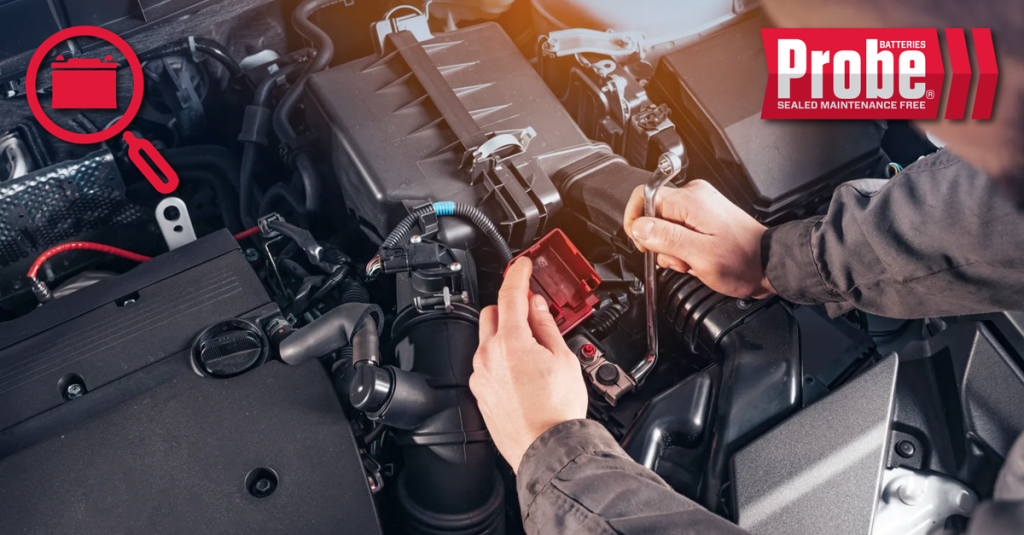
The solution is to check your battery terminals regularly for white or blueish deposits, which are signs of corrosion. These can be carefully cleaned using a mixture of bicarbonate of soda and water, with a small brush. Ensure the terminal clamps are tight and secure. And if you are regularly doing short trips in stop-go traffic, your alternator may not be giving your battery sufficient time to recharge. A longer drive once a week, or a top-up charge using a smart charger, will keep the battery at a healthy state of charge.
Highveld cold fronts and hard starts
For those inland, particularly on the Highveld, this winter will still bring sharp cold fronts that drop temperatures significantly overnight. Cold reduces the cranking power of any battery. Your engine also becomes harder to turn over in cold conditions because engine oil thickens and increases resistance. The result is that your battery needs to work harder at exactly the moment it is least capable of doing so. A battery that cranks an engine perfectly on a mild afternoon may simply not have enough in reserve on a sub-zero winter morning.
The warning signs are worth knowing. If your engine sounds sluggish or laboured when starting, if your headlights seem dim, or if your battery warning light flickers, do not ignore these signals. Have your battery load-tested immediately. A battery can show a full charge on a voltmeter and still fail under load conditions. Load testing is the only reliable way to assess true battery health, and any Probe branch or Probe-accredited reseller can carry this out quickly and affordably.
The temperature swing: a battery’s hidden enemy
Perhaps the greatest challenge this winter will present is not the cold or the rain on their own, but the swing between the two. For inland drivers, a warm week followed by a sharp cold front puts your battery through repeated thermal cycling. Each expansion and contraction stresses the internal plates of the battery, and over time this contributes to premature failure. For coastal drivers, the challenge is different but equally demanding: shifting between humid, rain-heavy periods and warmer dry spells accelerates corrosion and keeps electrical systems working overtime. In both cases, a battery that is not maintained at a full state of charge is the most vulnerable.
If you are not already using a smart charger and your vehicle sits unused for extended periods, this is the winter to invest in one. A smart charger maintains your battery at an optimal charge level without the risk of overcharging, and it is one of the most cost-effective tools a driver can own. Probe stocks the MaxLi range of smart battery chargers, available in 6V, 12V and 24V options to suit everything from a small passenger car to a heavy-duty vehicle.
A note for hybrid drivers
Hybrid vehicles are becoming increasingly common on South African roads, and their drivers face a specific set of winter challenges worth understanding. A hybrid relies on two battery systems: the large high-voltage battery pack that powers the electric motor, and a conventional 12V battery that handles startup and onboard electronics. Cold weather slows the chemical reactions inside both, reducing the capacity of the high-voltage pack and making the car spend more time recharging it. This means you may notice reduced electric-only range and slightly lower fuel efficiency during winter months.
The 12V battery deserves particular attention. If it weakens, your hybrid may not even enter ready mode, regardless of how healthy the main battery pack is. Hybrid owners should have their 12V battery tested at the start of winter, drive the vehicle regularly to keep both battery systems cycling, and avoid leaving the car parked for extended periods in the cold. Probe’s Force EFB and Ultimate AGM batteries are well suited to the demands of hybrid 12V applications, offering the deeper cycling capability these vehicles require.
Stay on the road with Probe
Probe has been keeping South Africans on the road for decades, and its battery range is built with the realities of local conditions firmly in mind. Whether you drive a compact city car along the KwaZulu-Natal coast, a hybrid along the Atlantic Seaboard or a heavy-duty 4×4 across the Highveld, there is a Probe battery engineered for your application. The Dynamic range offers consistent, reliable performance for everyday drivers, while the Extreme range is built for high-stress applications, with advanced temperature tolerance and enhanced durability that handles both summer heatwaves and winter cold fronts with equal composure. For those with start-stop vehicles or advanced onboard electronics, Probe’s Force EFB and Ultimate AGM batteries deliver the cycling capability these modern vehicles demand.
This winter, do not leave your battery to chance. Use Probe’s handy Battery Finder to identify the right battery for your vehicle, and find your nearest Probe dealer. The best time to replace your battery is before it fails.
Stay powered and stay moving with Probe.